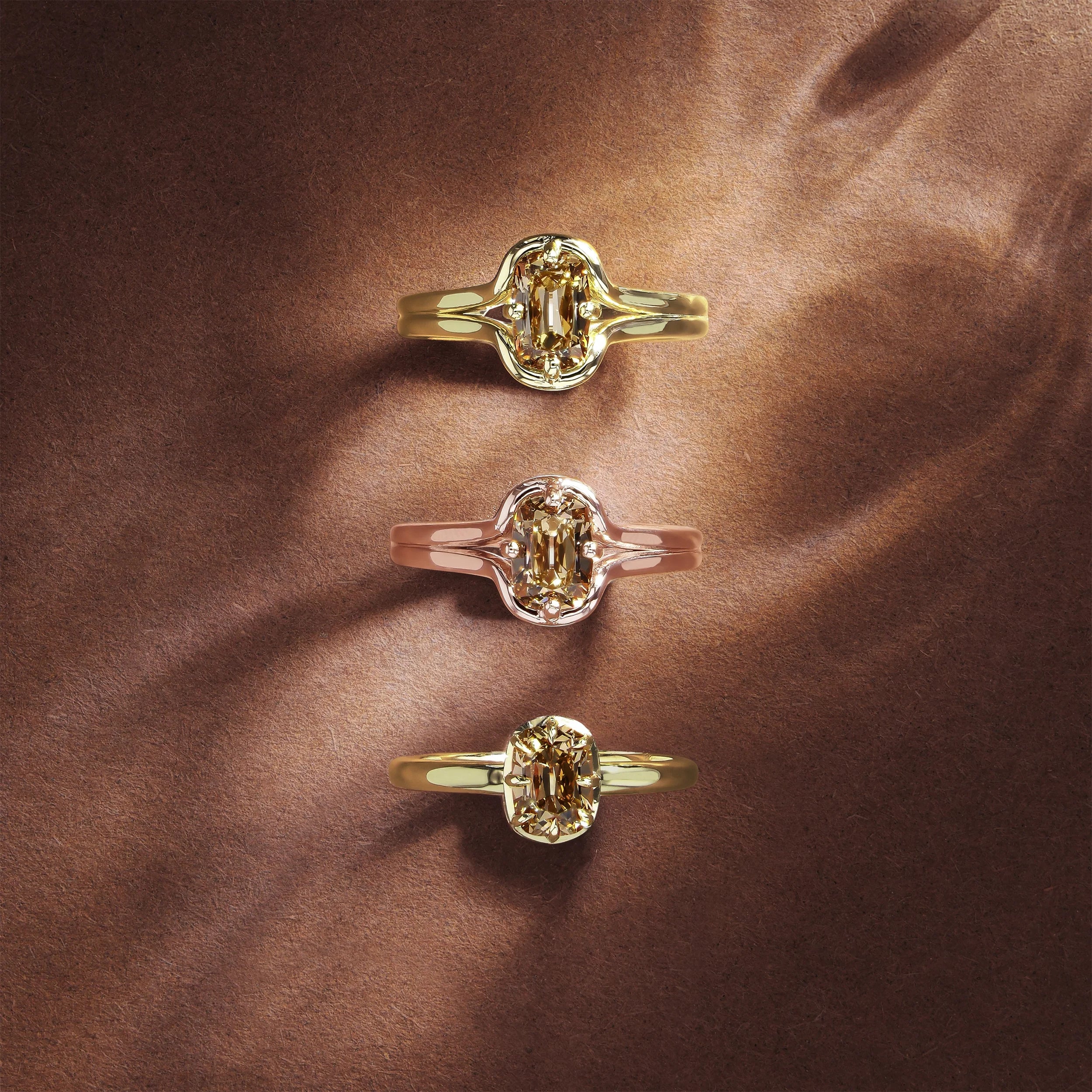

Engagement ring types are categorized based off of three criteria: setting style, center stone shape, and metal type. Popular setting styles include solitaire, halo, three-stone, and bezel engagement rings. Center stones include round, oval, emerald cut, pears, cushions, and more. Common metal types include yellow gold, white, gold, rose gold, or platinum. Walk into any jewelry store and the options are overwhelming. Solitaire or halo? Round or oval? Platinum or gold? We know buying an engagement ring is a once-in-a-lifetime decision you often have to make with very little experience. The types of engagement rings available today span dozens of setting styles, stone shapes, metal options, and band combinations, each creating a completely different look and feel. Once you understand how those three categories interact, every other decision becomes much easier. This guide breaks it all down in plain language, so you can walk in knowing exactly what you want.
Part OneWhat Are the Different Types of Engagement Ring Settings?
← Scroll to see more →
| Setting Type | Look | Stone Security | Best For | Active Lifestyle? |
|---|---|---|---|---|
| Solitaire (Prong) | Classic, open | Moderate | All shapes | With care |
| Bezel | Modern, sleek | High | All shapes | Yes |
| Halo | Glamorous, large-looking | Moderate | Round, cushion, oval | With care |
| Three-Stone | Symbolic, substantial | Moderate-High | Mixed shapes | With care |
| Pave | Sparkly, detailed | Moderate | All shapes | No |
| Channel | Clean, minimal | High | Rectangular/square | Yes |
Solitaire Setting
A solitaire engagement ring features a single center stone held by prongs, typically four or six, above a plain metal band, with no accent diamonds. It is the most enduring setting in fine jewelry, and for good reason: nothing distracts from the stone itself. Four prongs expose more of the diamond, making it appear slightly larger and rounder. Six prongs, famously introduced by Tiffany & Co. in 1886, grip the stone more securely at the cost of a small amount of visible surface area. Solitaires are often chosen because she values something classic and timeless, with all of the focus shining on the diamond itself.

Halo Setting
Popular in the 2000's, a halo engagement ring surrounds the center stone with a circle of smaller accent diamonds, creating the illusion of a larger center stone and amplifying overall sparkle. There are three main variations: a single halo (one ring of accent stones), a double halo (two concentric rings for even more presence), and a hidden halo (accent stones set underneath the center stone, visible only from certain angles). A halo setting can often offer the illusion of making the center diamond larger, as it's surrounded by smaller diamonds. This is a useful tip if you're working with a tighter budget.

Bezel Setting
Adored by modern aesthetic brides-to-be, a bezel setting encircles the center stone in a custom metal rim rather than holding it with prongs, offering a smooth, modern look and excellent stone protection. There are two versions: a full bezel, where metal wraps completely around the stone, and a semi-bezel, where the metal covers the sides but leaves the top and bottom open. Because the diamond sits low and secure within the bezel, these settings are often a practical choice for those who are active or use their hands a lot, such as nurses and athletes. It's also a strong trend right now for those looking for a modern, clean aesthetic. This type of quiet luxury setting has been chosen by many A-listers and celebs in recent years like Taylor Swift and Zendaya.

Three-Stone Setting
Adored by true romantics, a three-stone engagement ring features one larger center stone flanked by two smaller side stones, traditionally symbolizing a couple's past, present, and future. It is also described as representing friendship, love, and fidelity, depending on who you ask. Either way, there is meaning built into the design itself. The side stones can match the center stone's shape, or contrast it: baguette sides with an oval center, for example, is a classic pairing with real graphic impact. This style is also known as a trinity ring or trilogy ring.

Pave and Channel Settings
Both pave and channel settings describe how smaller diamonds are set along the band rather than how the center stone is held. A pave setting features rows of tiny diamonds set closely along the band surface, secured by small metal beads, creating a continuous sparkle effect. The word "pave" comes from the French word for "paved." A channel setting places accent diamonds in a groove between two strips of metal, flush with the band surface, for a sleek, snag-free finish. Pave offers more visible sparkle whereas channel settings are more durable and far better suited to active lifestyles.

What Are the Most Popular Engagement Ring Diamond Shapes?
- Round Brilliant — most popular globally; maximizes sparkle; 57–58 facets
- Oval — elongated, flattering on fingers; large face-up appearance per carat
- Cushion — soft corners, vintage feel; popular for romantic aesthetics
- Princess (Square Brilliant) — modern, geometric; bold and angular
- Emerald — rectangular step-cut; shows color and clarity more than brilliant cuts; Art Deco-inspired
- Pear — teardrop shape; elongates the finger; worn with point toward the fingernail
- Marquise — elongated with pointed ends; creates an illusion of finger length
- Asscher — square step-cut; similar to emerald but squarer; vintage glamour
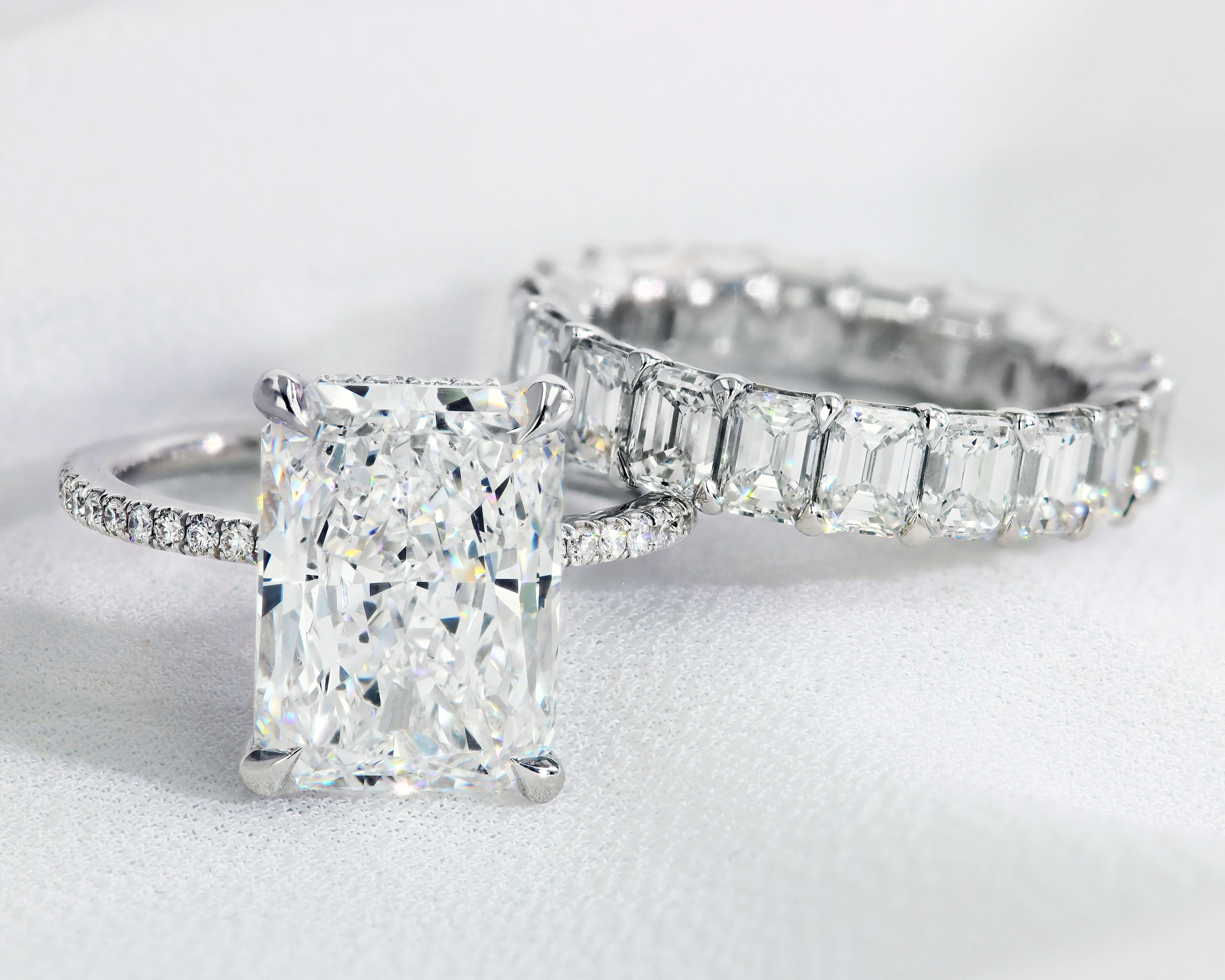
- Radiant — rectangular with brilliant-cut facets; combines elegance with sparkle
- Heart — romantic, symbolic; requires skilled setting to maintain shape integrity
Round Brilliant Cut
A round brilliant cut diamond is often adored by the timeless bride-to-be. If you are someone who loves maximum sparkle but in a timeless way, a round diamond may be the perfect choice for you. Because of its mass appeal and timeless quality, this cut accounts for the majority of engagement ring diamonds sold globally. Its 57 or 58 facets are engineered specifically to maximize three optical qualities: brilliance, fire, and scintillation. It's also the only shape for which the GIA assigns an official cut grade, from Excellent to Poor. The honest trade-off: it's often the most expensive diamond shape per carat, both because of its popularity and because more rough diamond is lost during cutting than with most fancy shapes.
Oval, Pear, and Marquise: Elongated Shapes
Oval, pear, and marquise diamonds share a key characteristic: their elongated outlines make fingers appear longer and slimmer when worn. These shape diamonds are often chosen by someone who loves a timeless, classic look but wants something a little different than a round. These elongated shapes also tend to have a larger face-up appearance per carat compared to round diamonds, meaning you can often get a stone that looks bigger for the same budget. Oval diamonds in particular have surged in popularity over the past several years and remain one of the top-requested shapes at J.R. Dunn. One of the most sought-after shapes lately are elongated cushion engagement rings, offering a unique take on an otherwise very timeless look.

Emerald and Asscher: Step-Cut Shapes
Often chosen by a refined and elegant woman, step-cut diamonds have fewer, larger facets arranged in parallel steps, creating a "hall of mirrors" effect. Think deep, glassy, and reflective rather than flashy. Emerald cuts are rectangular with a slight art deco elegance that has defined sophisticated jewelry for nearly a century. Asscher cuts are the square version of the same concept. If you're choosing a step cut, one thing to consider is because of how the facets are cut in the diamond, the stone's color and clarity will show more than a brilliant cut diamond. So if you're drawn to either shape, you will generally may want to go higher on the GIA color scale (G or above) and choose a clarity grade that looks clean to the naked eye.
What Types of Stones Are Used in Engagement Rings?
- Natural Diamond — hardest natural substance (10 on the Mohs scale); classic; highest price per carat
- Lab-Grown Diamond — chemically identical to natural diamond; typically 40–60% less expensive; growing in popularity
- Sapphire — second hardest gemstone (9 on Mohs); blue is most popular but available in pink, yellow, and many other colors. This beautiful stone is often associated with royalty, as it was chosen by Kate Middleton, Princess of Wales.
- Ruby — deep red; Mohs hardness 9; bold and romantic
- Emerald — vivid green; Mohs 7.5–8; softer than diamond, so it requires a protective setting
- Morganite — soft blush-pink; popular in rose gold settings; more affordable than diamond
- Moissanite — lab-created; nearly as hard as diamond (9.25 Mohs); high brilliance; significantly more affordable
What Metals Are Used in Engagement Rings?
← Scroll to see more →
| Metal | Color | Durability | Maintenance | Best For |
|---|---|---|---|---|
| Yellow Gold (14K) | Warm gold | High | Low | Classic look; active wearers |
| Yellow Gold (18K) | Richer gold | Moderate | Low | Premium finish; less daily wear |
| White Gold | Silver-white | High | Rhodium re-plating every 1–2 years | Modern, diamond-enhancing look |
| Rose Gold | Blush pink | High (copper content) | Low | Romantic aesthetic; flattering on warm skin tones |
| Platinum | Silver-white | Very high | Develops patina over time | Best for longevity; hypoallergenic |
Types of Wedding Bands and How to Wear Your Engagement Ring and Wedding Band Together
An engagement ring is presented at the proposal. A wedding band is exchanged at the ceremony. After marriage, most people wear both on the same finger, with the wedding band closest to the heart. The types of bands for engagement rings are worth thinking about before you buy your engagement ring, because certain settings pair naturally with certain band shapes.
- Plain metal band — the most classic option; sleek and unadorned; complements any engagement ring without competing with it
- Diamond pave band — rows of small diamonds along the band; adds sparkle alongside the engagement ring
- Eternity band — diamonds set all the way around the band with no break; the most dramatic of the accent band styles
- Shaped or contour band (tracer band) — designed with a curved or notched profile that sits flush against a specific engagement ring shape; essential for rings with a lower-set center stone or an irregular silhouette
- Milgrain band — a textured border of tiny metal beads along the edges; an antique-inspired detail that pairs beautifully with vintage-style engagement rings
We advise you when choosing your engagement ring, try on some different wedding bands before committing to it. You'll see that some combinations that look perfect individually create an awkward gap or an uncomfortable fit when worn together. We invite you to come into our showroom and try wedding bands on, our team is here to help best guide you with their years of knowledge and experience.
Browse our full collection of wedding bands to find your perfect match.
How to Choose an Engagement Ring: Key Buying Considerations
- Set a realistic budget — Factor in the center stone type, setting complexity, metal choice, and ring size. Your number is your number. The old "three months' salary" rule was invented by De Beers in a 1930s advertising campaign. It has no real meaning. Buy within your means and without apology.
- Choose a setting style — Prioritize wearability alongside aesthetics. A ring that is beautiful but impractical for your daily life will spend more time in a drawer than on your hand.
- Select a center stone shape — Consider finger shape, personal style, and budget. Elongated shapes like oval and pear often look larger for the same carat weight, which is a genuine value consideration.
- Decide on stone type — Natural diamond, lab-grown diamond, or colored gemstone. Each has its own qualities, and there is no objectively correct answer. It depends on what matters most to the person wearing it.
- Pick a metal — Balance aesthetics with your actual maintenance commitment and daily wear habits. If you prefer something that simply endures, platinum or 14K yellow gold are both excellent choices.
- Think about your wedding band now — If you plan to wear both together, factor in how they will sit and stack before you finalize either purchase.
The 4Cs of diamond quality (cut, color, clarity, and carat) each affect price and appearance in different ways, and understanding them gives you real leverage when comparing stones. Our diamond buying guide covers each one in detail.
Finally: try rings on in person whenever possible. Renders and photography rarely convey how a ring actually feels and looks on the hand.
In the end, choosing the right engagement ring comes down to five things. Your perfect setting, shape, stone, metal and budget. Knowing how each of these affects the others is the foundation of a confident purchase. We invite you to explore our collection of engagement rings, which you can easily shop online by these categories. Prefer to see them in person? Join us in our Lighthouse Point showroom, located conveniently between Fort Lauderdale and Boca Raton. Our team of experts have been helping clients just like you find the perfect ring for over 50 years.
Your complete engagement ring guide