Diamond Provenance & Impact
How Sierra Leone’s Diamonds Are Helping Rebuild a Nation, One Diamond at a Time
Sierra Leone is best known to most of the world through a movie. For twenty years, Blood Diamond has shaped how people picture this West African nation and its diamonds. The Sierra Leone of 2026, though, is not the Sierra Leone of that film. It is a country more than two decades removed from conflict, with old mining sites turning back into farmland and a growing program that pays its artisanal miners fair market value for every stone they find, by name, not by anonymous sack. This is the story of that transformation, the miners living it, and one 5-carat diamond that carried it from the ground in Kono District all the way to our showcase in Lighthouse Point, Florida.

A Nation Reclaiming Its Story
Every diamond-producing nation has its own story. Botswana’s is often held up as the industry’s gold standard: six decades of diamond revenue building schools, hospitals, and roads. Sierra Leone is writing a newer chapter, and it is already a remarkable one. The civil war that once defined the country’s reputation ended in 2002, and in the more than two decades since, land once dug for diamonds in Kono District is being reclaimed and replanted. Miners and their neighbors receive tools, seeds, and ongoing support to turn former mining ground into small farms, restoring native vegetation along the way and creating jobs that have nothing to do with digging. The result is food for the community, income for local farmers, and a landscape slowly healing itself.
The government has made real, measurable progress formalizing artisanal mining alongside this, bringing small-scale miners who once worked entirely outside any formal system into a structure with fair pay, training, and legal protection. That shift matters because artisanal and small-scale mining is not a footnote in the diamond world. It remains a vital source of income for communities across West and Central Africa, and when that sector is formalized and fairly paid, the impact reaches far beyond any single miner. It reaches families, schools, and entire districts.
What Is GemFair, and Why It Matters
GemFair is the program making this possible, and today it is one of the best-known names behind ethically sourced diamonds from West Africa. Established in 2018 by De Beers Group in partnership with the Diamond Development Initiative, GemFair was built around a simple but powerful idea: miners should get paid full, fair market value for the diamonds they find, rather than selling into an informal chain where most of the value disappears before the stone ever reaches a cutter.
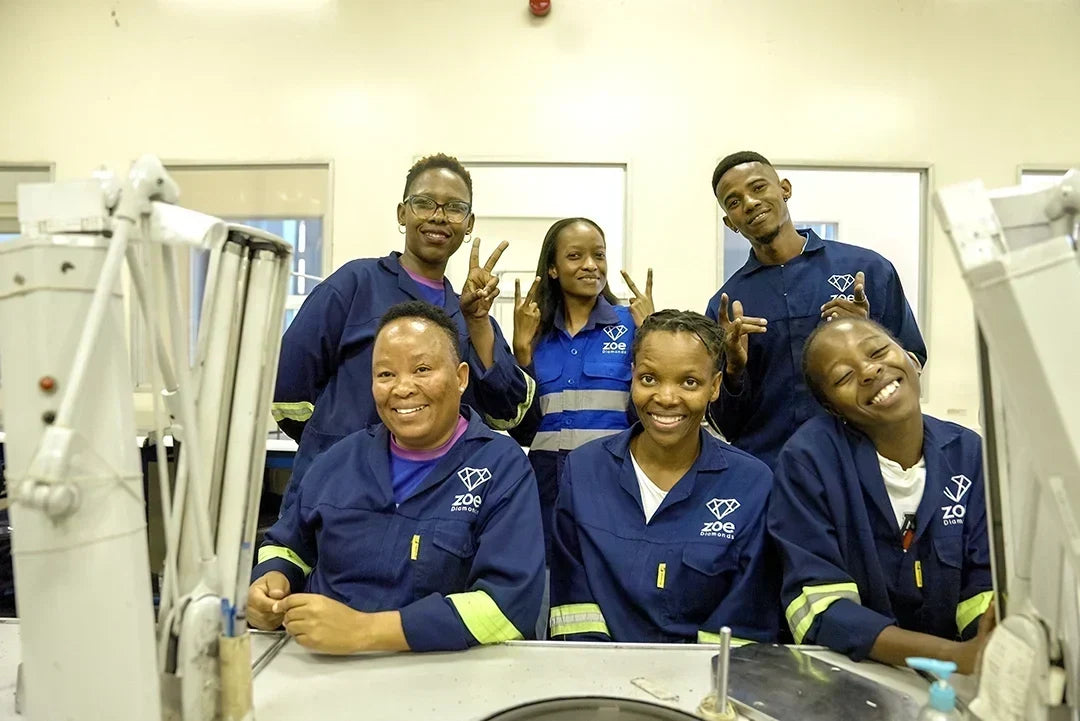
To participate, mine sites have to meet real standards: protecting the health and safety of workers, respecting human rights, and excluding child labor entirely. In return, miners gain a secure, transparent, and legal route to market, along with training in diamond valuation so they understand what their stones are actually worth. Each registered miner uses a tablet provided by GemFair to photograph every diamond they recover and record exactly where it was found, the first link in a chain of custody that follows the stone from that point forward. That same data is later verified on Tracr™, De Beers’ blockchain platform for natural diamond traceability, so nothing about a diamond’s origin has to be taken on faith.
This is also where the idea of beneficiation comes in, a term you will hear often around responsible sourcing. It simply means making sure a natural resource gives something back to the country it came from, not just in the moment of sale, but in jobs, training, infrastructure, and opportunity that stay local. GemFair is beneficiation in practice.
The Miners Behind the Stones
Numbers tell part of the story. People tell the rest. Tamba is one of the artisanal miners who joined GemFair in Kono District, and he describes the shift in his own words:
“My membership with GemFair has been the best experience ever… As a father of 15 children, tuition payment has been less challenging compared to time past. GemFair has not only improved my mining methods but also changed my status.”
Tamba, GemFair Artisanal MinerOther miners describe the same shift in their own words. Mbalu, chairlady of one GemFair reclamation site, put it simply:
“This land was a mining site, but now it is helping to give us life.”
Mbalu, Chairlady, GemFair reclamation siteThese are not isolated accounts. According to De Beers Group’s 2026 reporting, GemFair has now purchased more than 20,000 diamonds from Sierra Leone’s artisanal miners and conducted over 5,700 compliance visits to keep those standards in place.
Full Traceability, From Rough Stone to Ring
One of the most common questions we hear is why these diamonds aren’t simply available to buy loose, straight from the source. The honest answer is that GemFair diamonds move through a carefully managed, traceable channel, from the mine site into De Beers’ broader supply chain and ultimately to select retail partners like J.R. Dunn, rather than being sold directly to the public at the point of origin. That structure is exactly what makes the traceability possible in the first place.
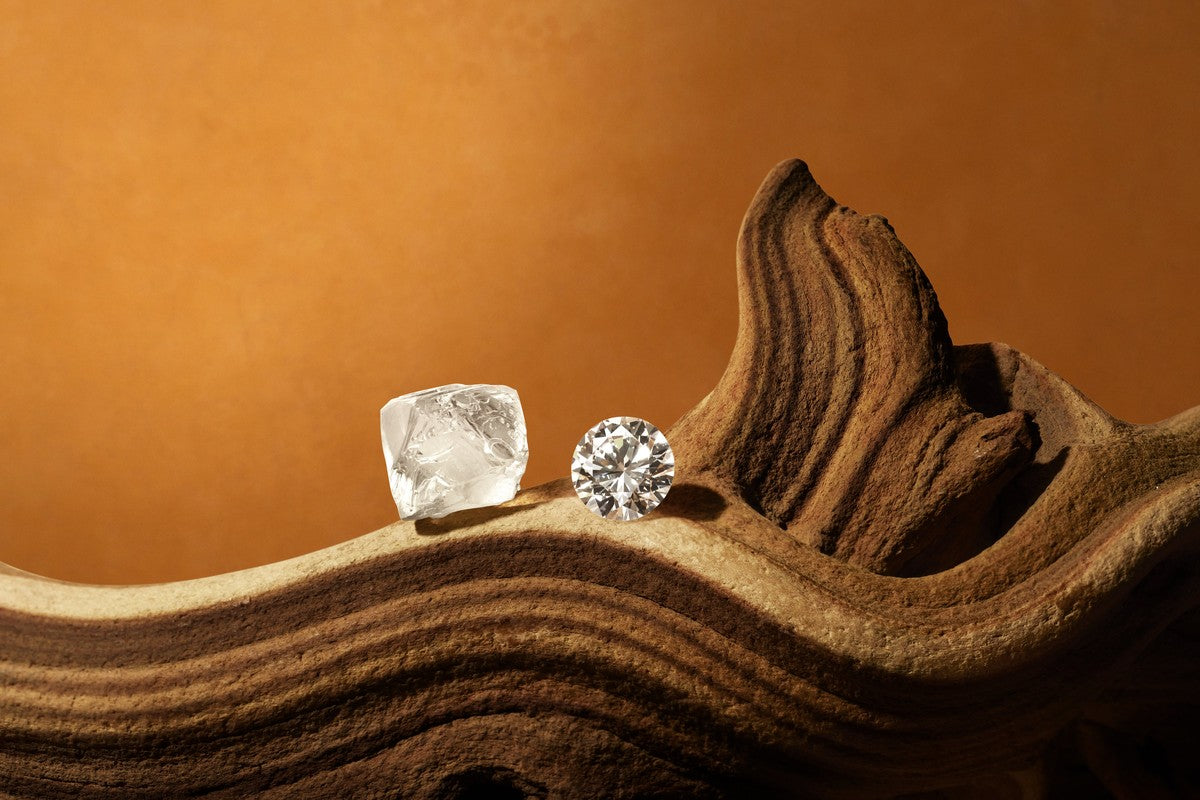
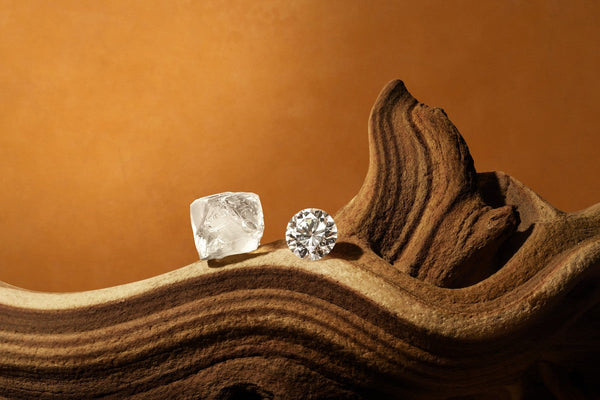
Every diamond sourced this way can be followed from its origin to the showroom floor. Through De Beers’ Origin Experience platform, you can look up a diamond by its inscription number and see details like its age, its rarity, and its GIA certification, along with an image of what it looked like in its original rough form, before a single facet was cut. Each stone is independently graded by the GIA, so the beauty and the backstory are verified by the same rigor our clients expect from any diamond we sell.
For years, some retailers quietly shied away from any diamond with a Sierra Leone provenance, a hesitation rooted in a war that ended a generation ago. We think that story is exactly backwards. A fully traceable Sierra Leone diamond, sourced through a program like GemFair, is one of the most transparent and responsibly sourced stones you can own today. At J.R. Dunn, we want to be at the forefront of that change in our industry, not quietly standing apart from it. In 2025, we were selected as one of the first North American retail partners to introduce ORIGIN by De Beers Group, and we believe promoting that kind of transparency is simply good practice.
A Story That Inspired a Purchase
This story became personal for Sean Dunn, President and Co-Owner of J.R. Dunn Jewelers, the first time he learned what GemFair was actually doing in Kono District. “When I first heard about GemFair and what De Beers was doing to support artisanal miners in Sierra Leone, I was so moved that I immediately wanted to buy one of those diamonds,” Dunn said. He reached out directly to Mahiar Borhanjoo, Chief Commercial Officer of De Beers Group, to ask where he could find one, and learned through Rob Bates’ The Jewelry Wire premium chat that GemFair diamonds would be available through ORIGIN by De Beers Group, a program J.R. Dunn was already part of.
“I purchased a beautiful five-carat diamond and brought it straight to my uncle, Robert Pelliccia, our award-winning jewelry designer. I told him, ‘We’ve got to make a ring out of this,’” Dunn said. “We then purchased six additional diamonds from Sierra Leone to complete the design, each with documented origin and blockchain traceability.” The result is the Robert Pelliccia 5 Carat Diamond Engagement Ring: a 5.06-carat center stone in a compass setting, surrounded by six round brilliant side diamonds, all seven sourced from Sierra Leone through GemFair and documented through ORIGIN by De Beers Group and Tracr blockchain technology. You can view the center diamond’s verified Origin story, including its rough-form image and certification, through De Beers’ Origin Experience.
“What made this special wasn’t simply the diamonds themselves,” Dunn said. “It was knowing that their story was connected to people and communities working toward a better future.” That sentiment carries extra weight given who designed the piece: Robert Pelliccia is Sean Dunn’s uncle, which means the thread running through this ring connects a Sierra Leonean mine site, a family workbench, and the J.R. Dunn showroom floor in one unbroken line.

Full Circle: Blood Diamond Turns 20
It feels fitting that this ring exists the same year the film that first introduced so many people to Sierra Leone’s diamond story turns twenty. This November, the inaugural West Hollywood Human Rights Film Festival opens with a 20th anniversary screening of Blood Diamond, with remarks from director Ed Zwick, at the Pacific Design Center on November 20. A full showcase day of documentary features and shorts follows on November 21, and every screening is free to attend.
Twenty years ago, that film put a global spotlight on where diamonds come from and why that story matters. Twenty years later, programs like GemFair are proof of how much has changed since. A nation once defined by that conflict is now home to a model for how the diamond industry can pay its miners fairly and prove it, stone by stone. We think that is worth celebrating right alongside the film’s anniversary.
What This Means for the Future of Natural Diamonds
Dunn is candid about why he thinks GemFair matters beyond one ring. “What excites me about GemFair is that it addresses the realities of artisanal mining rather than avoiding them,” he said. “I think too often, as jewelers, we’re afraid to have the difficult conversations. We’d rather focus on the beauty of diamonds and avoid talking about the challenges that exist in some parts of the world. But ignoring a problem doesn’t make it go away.” That’s the thinking behind his commitment to traceability: it is meant to shine a light on the whole industry, the progress already made and the work still ahead, rather than letting either go unspoken.
For decades, diamonds, De Beers diamonds included, were sold almost entirely on the Four Cs: cut, color, clarity, and carat. Dunn thinks that’s no longer the whole story. “We need to be equally passionate about the people and countries where diamonds originate, and the opportunities those natural resources can create,” he said. At a moment when many engagement-ring shoppers are weighing lab-grown vs. natural diamonds, that kind of traceability is one answer a lab can’t replicate: a real place, real people, and a documented journey behind every carat. As Dunn put it, “I didn’t even need to see a diamond before I wanted to buy it. The story itself made me want the diamond.”
Questions We Get About Sierra Leone Diamonds
Can I purchase a loose GemFair diamond directly?
Not at the mine site itself, and not through De Beers directly, but it isn’t entirely out of reach either. GemFair diamonds move through a controlled, traceable supply chain into De Beers’ broader distribution network, where vetted trade buyers, such as a handful of specialty diamond dealers, can purchase them loose and resell them to collectors and jewelers. For most shoppers, though, the far simpler path is through a retail partner like J.R. Dunn, where the diamond arrives already graded, cut, and ready to tell its full story.
How does GemFair actually track a diamond?
Every registered miner uses a tablet to photograph and geolocate each diamond at the moment it’s found. That record follows the stone through evaluation, purchase, and cutting, and is verified on Tracr™, De Beers’ blockchain platform, so the chain of custody can’t be altered after the fact.
What does “beneficiation” actually mean?
It means a natural resource gives something back to the place it came from, in jobs, training, fair pay, and infrastructure, rather than all of its value leaving the country the moment the stone is sold. GemFair was built around that principle for Sierra Leone’s artisanal miners.
Is a Sierra Leone diamond the same as a conflict diamond?
No. A diamond sourced through GemFair is a conflict-free diamond, fully traced from the mine site forward and tied to a program built specifically to ensure miners are paid fairly and working under safe, legal conditions. That traceability is the opposite of how conflict diamonds moved through the market decades ago.
The Program at a Glance
- Program
- GemFair, established in 2018 by De Beers Group
- Founding Partner
- Diamond Development Initiative (DDI)
- Region
- Kono District, Sierra Leone
- Scale
- 500+ participating mine sites, supporting roughly 7,000 livelihoods
- Diamonds Purchased
- 20,000+, backed by over 5,700 compliance visits
- Miner Model
- Fair market value, paid directly to artisanal miners
- Traceability
- Tracked by tablet at the mine site, verified on Tracr™ before cutting
- J.R. Dunn’s Role
- Early North American retail partner, ORIGIN by De Beers Group (2025)
- Featured Piece
- Robert Pelliccia 5-Carat Diamond Engagement Ring, 18K White Gold (7 diamonds total)
See the Ring
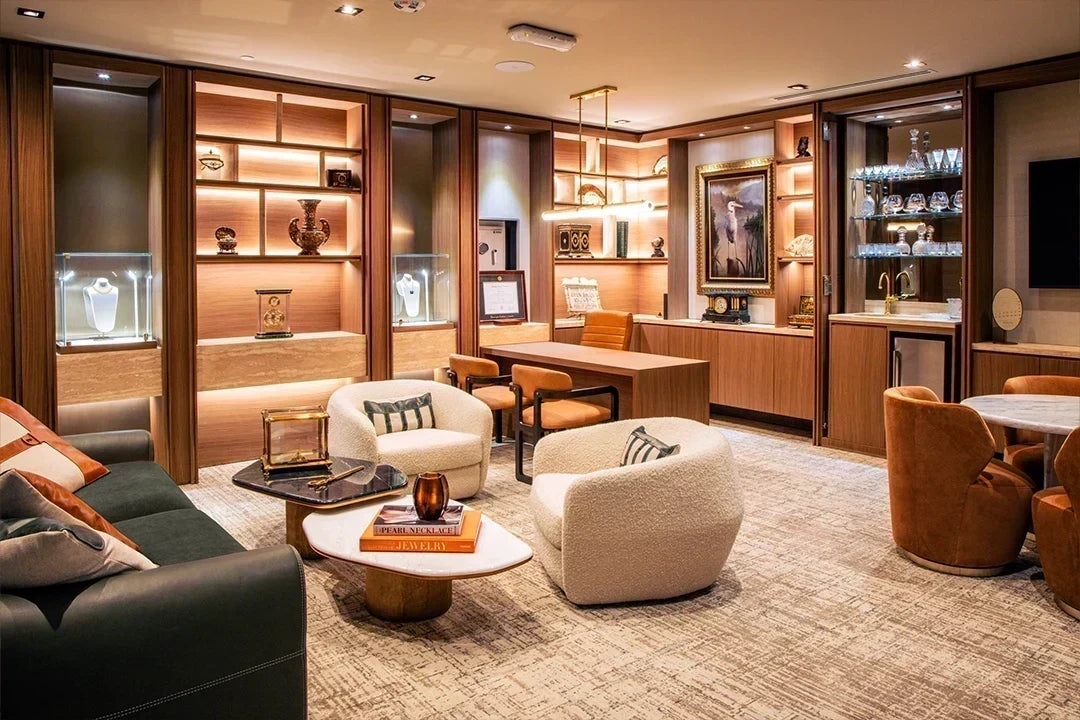
Visit our Lighthouse Point showroom to see the Robert Pelliccia 5 Carat Diamond Engagement Ring in person, or reach out to learn more about Sierra Leone’s GemFair program and our Origin by De Beers collection.
View the Ring Call (954) 782-5000