How Natural Diamonds
Transform
the Places They Come From
What happens to a community when something extraordinarily valuable is discovered beneath its feet — and why traceability should be the start of the story, not the end.
What happens to a community when something extraordinarily valuable is discovered beneath its feet? That's one of the questions I wish came up more often when people talk about natural diamonds. Most conversations understandably begin with the impact of mining on the Earth, and that's an important part of the story. However, there's another question that deserves just as much attention: what can a natural resource do for the people who live where it's found?
What Diamonds Have Done for Botswana
Botswana is the clearest example our industry has of what a natural resource can mean beyond the jewelry store. Diamonds have played a significant role in the country's economy and public revenues for decades. What interests me most, though, is how that conversation keeps evolving. Increasingly, the question isn't simply about extracting a resource; it's about how more of the value that resource creates can stay inside the country where it was found.
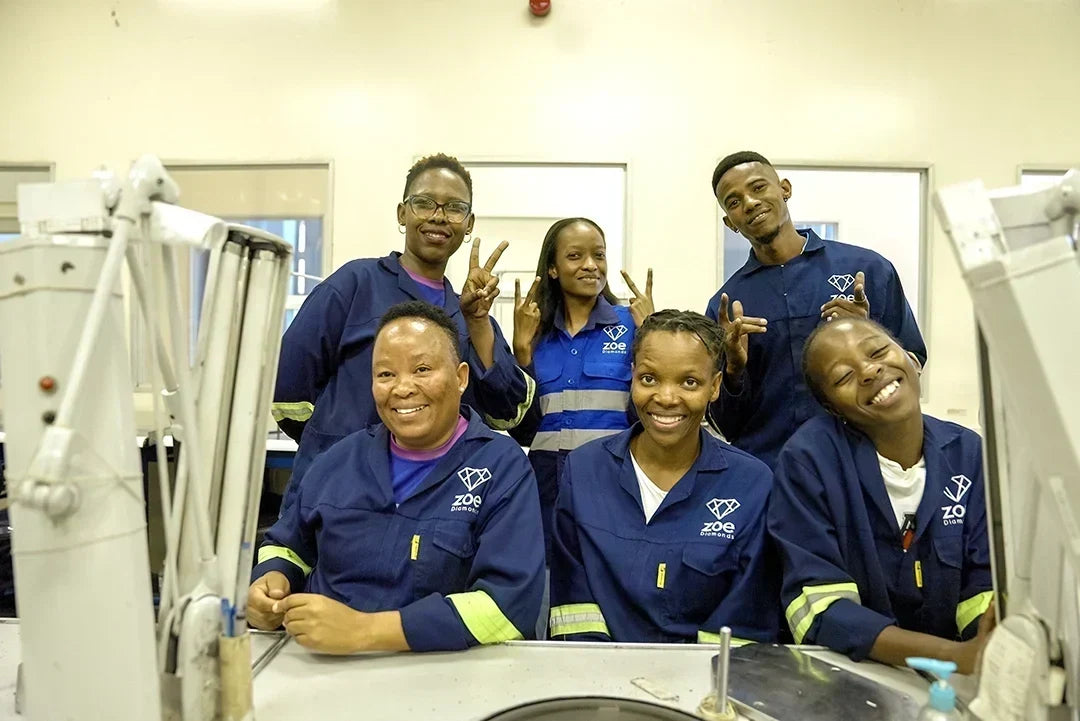
Instead of a rough diamond leaving the country the moment it's pulled from the ground, more of the value chain - sorting, cutting, polishing, entrepreneurship, and the businesses that grow around all of it can happen locally. That means skills, careers, and greater local participation in the diamond economy itself. Botswana continues to push this forward through initiatives like BotswanaMark, which emphasizes traceability, local reinvestment, and measurable social impact.
As an authorized dealer of natural diamonds since our founding in 1969, we've had the chance to experience a small piece of the Botswana story ourselves, through relationships we've built directly within the country's diamond industry. Those relationships changed the way I think about origin. Knowing where a diamond came from is interesting, but understanding what its origin means is something else entirely.
When the Story Is More Complicated
Not every diamond-producing country is Botswana. Angola, Sierra Leone, and other producing nations have different histories, institutions, economies, and challenges. Artisanal and small-scale mining raises difficult questions that don't have simple answers.
I don't think the answer is to avoid talking about those places just because the story isn't perfect. I think the better question is: what can realistically be improved next? That's what makes an initiative like GemFair worth paying attention to. GemFair works directly with artisanal and small-scale miners in Sierra Leone on responsible mining practices, traceability, formalization, and access to legitimate markets, including reclaiming former mining land for agricultural use.
It doesn't begin by demanding a perfect world. It begins with the world as it exists and asks how conditions can improve from there. That distinction matters more than it might sound.
"There is no perfect global supply chain, not in jewelry, fashion, technology, or automobiles. That doesn't excuse poor practices. It means the meaningful standard should be measurable progress.
Progress, Not Perfection
Too often, we debate about what's best for diamond-producing countries thousands of miles away from the people who live there. Different places require different solutions, and the important thing is having an achievable outcome and a way to measure whether we got there. In Botswana, the next stage might involve greater beneficiation, entrepreneurship, and more value retained locally. In Angola, the opportunity may look completely different. In an artisanal mining community in Sierra Leone, progress might mean formalization, safer practices, traceability, land restoration, or better access to legitimate markets.
Lisa's Story
Our 27-year-old art director, Lisa, attended the JCK jewelry show and spent time at the Angolan pavilion. She met people from Angola and other African diamond-producing nations and listened to them talk about their countries, families, careers, and what diamonds meant from their side of the supply chain. She came back with an entirely different perspective. Someone who had never wanted a natural diamond became one of the more vocal natural-diamond supporters in our organization. Nobody convinced her with an ESG statistic.
What Progress Actually Looks Like
Responsible sourcing has changed a great deal since the Kimberley Process first created an international system to keep conflict diamonds out of the legitimate rough diamond trade. Companies such as De Beers have layered on additional responsible-business standards, and traceability technology now lets many diamonds relate to where they came from and portions of their journey from rough to polished. Traceability should be the beginning of that conversation, not the end.
Beneficiation
Retaining more of the sorting, cutting, polishing, and entrepreneurship connected to a diamond inside the country where it was discovered.
Traceability
Technologies like Tracr and Sarine Diamond Journey connect a participating diamond with its origin and portions of its journey to market.
Formalization & Access
Programs like GemFair help artisanal and small-scale miners work more safely and reach legitimate markets on fair terms.
Local Voices
Miners, cutters, and entrepreneurs speaking for themselves — rather than being spoken about from thousands of miles away.
Natural or Lab-Grown? We'll Help Either Way
Consumers today are asking better questions: where did my diamond come from, was it responsibly sourced, can its journey be traced, and who benefited from its value? Increasingly, customers are also comparing natural and lab-grown diamonds, and we carry both. I want to be transparent about where I stand, I'm a natural diamond advocate, and I'm known as one within the jewelry industry. The deeper I've gone into the natural diamond supply chain and the more people I've met, the stronger that belief has become. But part of the J.R. Dunn Experience is giving customers choices. We carry lab-grown diamonds as a service option for people who prefer them, and if maximizing visual size for a particular budget is the priority, lab-grown can be a compelling choice. Read our natural vs. lab-grown diamond guide for a deeper look at how the two compare. Our job is to explain what you're buying and let you decide what matters to you.
A natural resource can transform the place it's discovered. People transform the rough diamond. Love transforms it into something no mine or laboratory could ever create.
A natural diamond existed long before any of us did. It formed deep within the Earth and was discovered in an actual place, where its value can create economic activity for the people who live there. A rough diamond is then transformed through human skill into something beautiful, and eventually it reaches someone looking for an engagement ring. That's when the most personal transformation happens, she looks at the ring, then back at him, and something that existed within the Earth long before either of them were born suddenly means something entirely different. It's more than a diamond. It's her diamond in the wedding photographs, on her hand for anniversaries and birthdays and thousands of ordinary days. Thirty years later, someone may recognize it as Mom's ring, and perhaps another generation eventually wears it.
Nature created a crystal, deep within the Earth, long before either of them was born.
People transformed it — miners, cutters, entrepreneurs, and the communities built around them.
Love decides what it ultimately means: a symbol of two people's story.
Common Questions About a Diamond's Origin
How does diamond mining help local communities?
The impact varies greatly by country and mine. When natural resources are managed responsibly, diamond activity can contribute to employment, local businesses, skills development, government revenues, and infrastructure. Botswana is one of the best-known examples of diamonds playing a significant role in a country's economy.
What is diamond beneficiation?
Beneficiation means retaining more of the economic activity associated with a natural resource within the country where it was discovered — including local sorting, cutting, and polishing, training, entrepreneurship, and other businesses connected to the diamond value chain.
What is GemFair?
GemFair is an initiative working with artisanal and small-scale diamond miners, particularly in Sierra Leone, to improve responsible mining practices, traceability, formalization, and access to legitimate markets.
Can you trace where a natural diamond came from?
Increasingly, yes — although not every natural diamond has the same level of traceability. Technologies and programs including Tracr and Sarine Diamond Journey can provide origin and supply-chain information for participating diamonds.
Are all natural diamonds mined the same way?
No. Natural diamonds come from different countries, geological deposits, and types of mining operations, ranging from large industrial mines to artisanal and small-scale mining. Their environmental, social, and economic circumstances can vary considerably as a result.
What does "responsibly sourced" mean for a natural diamond?
Responsible sourcing can include compliance with the Kimberley Process as well as additional supplier standards, environmental practices, human-rights expectations, and traceability programs. Ask your jeweler what documentation and sourcing information are available for the specific diamond you're considering.
Should I choose a natural or lab-grown diamond?
There isn't one choice that's right for everyone. If you're weighing natural against lab-grown, our natural vs. lab-grown diamond guide goes deeper into the differences in origin, price, size, and what each option may mean to a couple choosing an engagement ring.
Find the diamond whose story
you can trace.
Browse our natural diamond collection or speak with one of our diamond specialists.
Every stone is hand-selected at our Lighthouse Point showroom.
4210 N Federal Hwy, Lighthouse Point, FL 33064 ·
(954) 782-5000 ·
jrdunn.com